I Built a 35-Agent AI Coding Swarm That Runs Overnight
Follow-up to The Week I Stopped Coding
A month ago, I wrote about the moment I stopped coding and started orchestrating AI agents. That post was about the shift — the emotional and philosophical pivot from developer to director.
This post is about what happened after.
I built a system. Two physical machines on my home network, 14 containers, 35 concurrent AI coding sessions, and a 5-layer memory architecture that teaches agents not to repeat each other's mistakes. It scans my project management board every two minutes, picks up tickets, creates isolated git worktrees, spawns Claude Code sessions, writes code, creates pull requests, and updates ticket statuses — all without me touching a keyboard.
It processes 20-40 tickets overnight. I wake up to PRs.
I've Seen This Before
In 2015, I was drawing CI/CD pipeline diagrams on whiteboards at Kohl's. Build → Test → Publish → QA → Deploy → Stabilization → Release. The full continuous delivery loop, managed by hundreds of people across multiple teams — developers, QA engineers, DevOps, project managers, release coordinators.
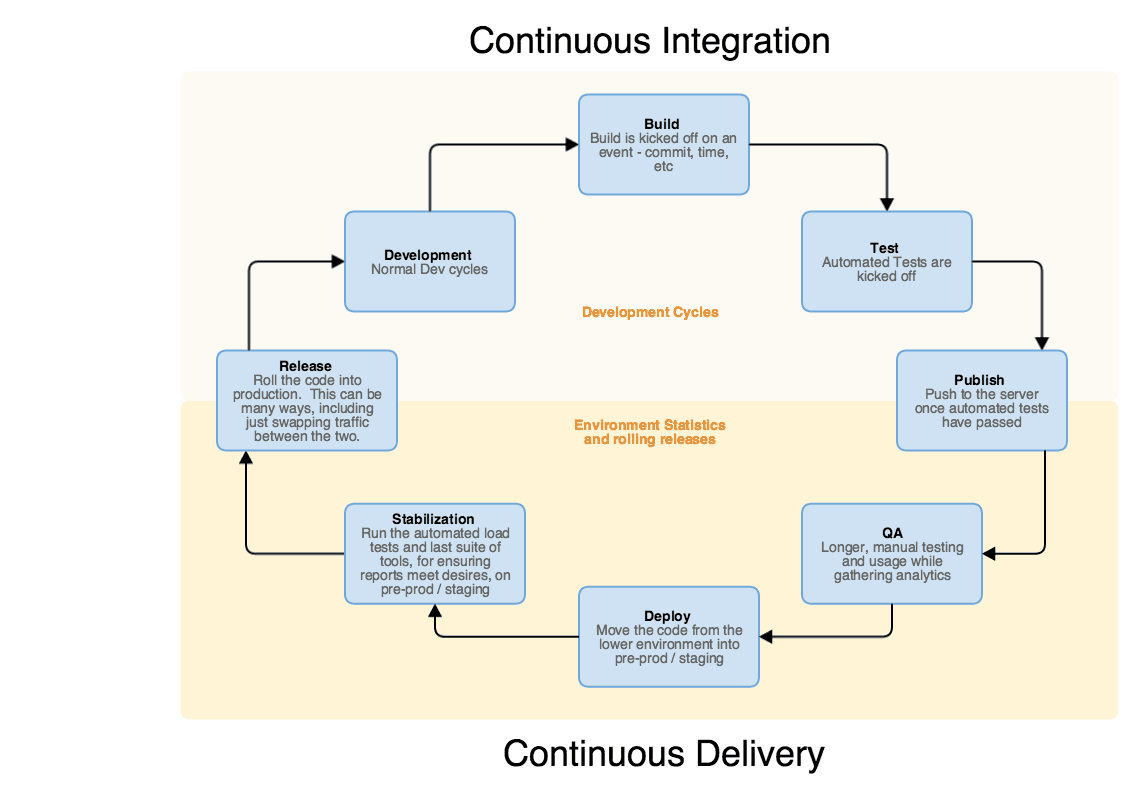
I look at that diagram now and I see my swarm's ticket lifecycle. The stages are identical. Linear scan is the ticket intake. The Claude Code session is the development cycle. Sub-agents run the build, test, and review gates. gh pr create is the publish step. Vercel auto-deploys on merge. Prometheus watches the stabilization metrics. The only difference is who's executing each stage.
In 2015, that loop required a branching strategy document that went through 11 revisions, a deployment runbook with IBM coordination steps, Chef cookbooks for node management, and a standing army of engineers. In 2026, it's one Node.js script and a vector database.
I'm not saying the people don't matter — they built the institutional knowledge that's now encoded in CLAUDE.md files and Qdrant collections. But the execution layer has fundamentally changed. The same pipeline I designed for human teams a decade ago now runs autonomously on two machines in my house.
The Hardware: Two Machines, One Network
No cloud compute for the swarm itself. Two machines on my home network — a Linux desktop and a Mac Studio I picked up for mobile builds.
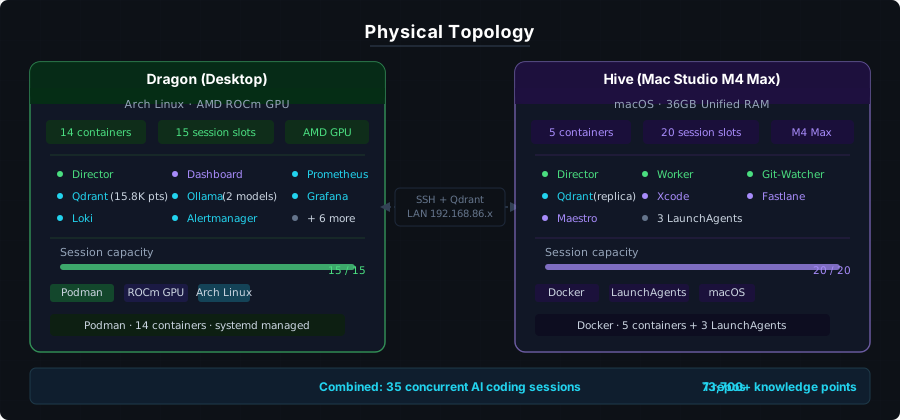
Dragon (desktop) — Arch Linux, AMD ROCm GPU, 14 Podman containers. This is the primary orchestration node. It runs the director, the dashboard, Qdrant for vector search, Ollama for embeddings, and the full Prometheus/Grafana monitoring stack. 15 concurrent session slots.
Hive (Mac Studio) — The only machine with Xcode, iOS simulators, Android emulators, Fastlane, and Maestro for mobile QA. 20 concurrent session slots. Three macOS LaunchAgents handle its director, worker, and git-watcher processes.
They talk over SSH and a shared Qdrant instance. The desktop pushes build tasks to the hive's Qdrant — I use the vector database as a task queue because macOS LaunchAgents get EHOSTUNREACH when connecting back to the desktop IP. Flipping the direction solved it.
Total capacity: 35 concurrent AI coding sessions across 6 repositories.
The Three Layers
The architecture has three distinct layers, each operating independently.
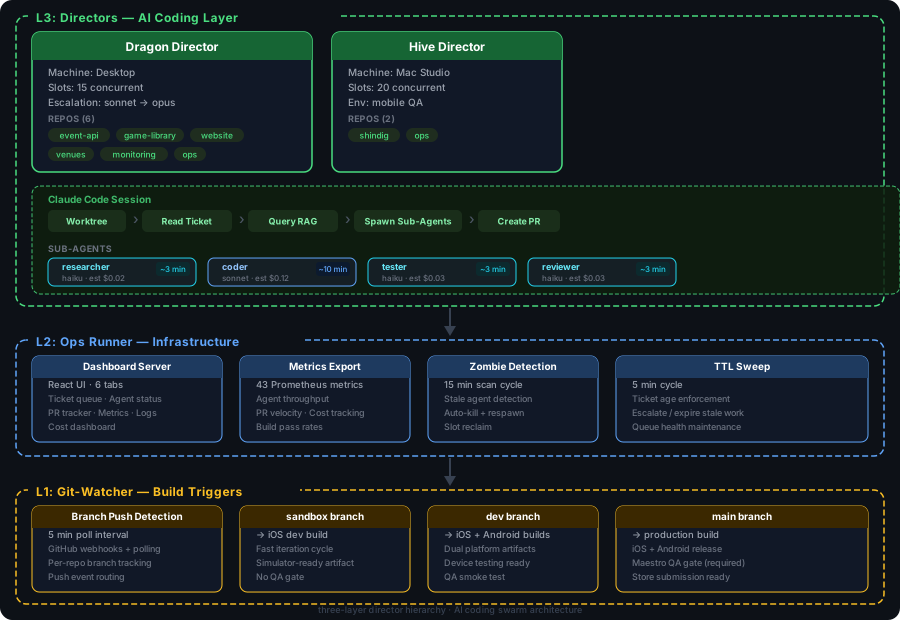
Layer 2: Ops Runner. Infrastructure health. Zombie process detection every 15 minutes. TTL sweeps that mark tasks stuck over 30 minutes as failed. Metrics export to Prometheus — 43 metrics every 5 minutes. A React dashboard with 6 tabs that gives me visibility into what the swarm is doing. Without this layer, you don't know if the swarm is working or burning money.
Layer 3: Directors. This is the AI layer. Two directors — Dragon on the desktop handling backend and infrastructure (event-api, game-library, venues, monitoring, ops), Hive on the Mac Studio handling frontend and mobile (shindig, website). Each scans Linear every 2 minutes, routes tickets to the correct repo, creates git worktrees for isolation, and spawns Claude Code sessions.
The director is about 2,400 lines of Node.js. It's the single most important piece of the system — and in major need of refactoring. Now that I'm wrapping back around to making the ops swarm self-sufficient, it needs to follow its own linting and testing protocols. The irony of an autonomous coding system that doesn't enforce code quality on itself is not lost on me.
How a Ticket Becomes a PR
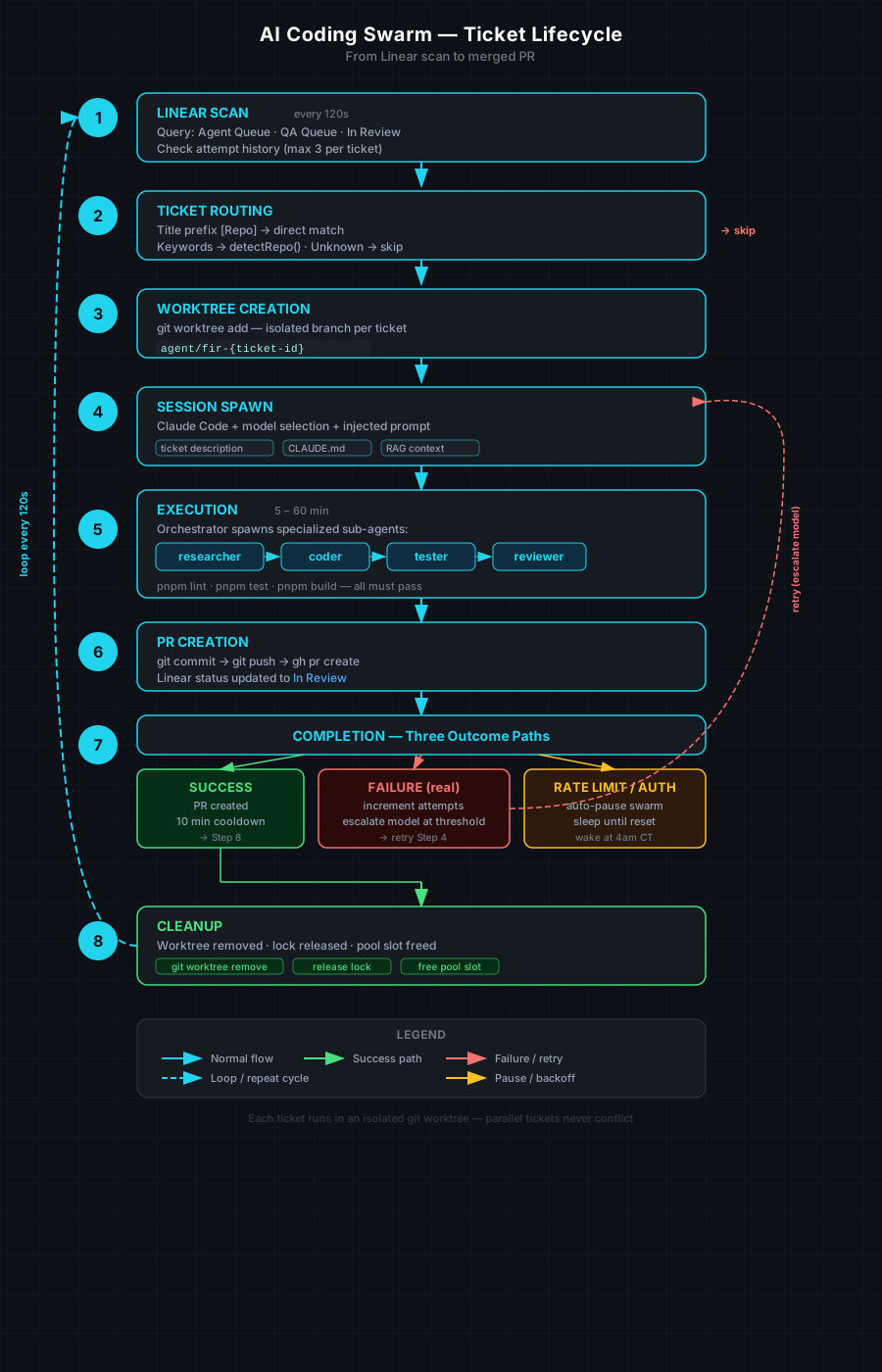
- Linear scan (every 120 seconds). The director queries for tickets in Agent Queue, QA Queue, QA Testing, or In Review. It checks attempt history — each ticket gets 3 shots before it's skipped.
- Ticket routing. Title prefix
[website]goes to the website repo. No prefix? Keyword matching. ThedetectRepo()function is blunt but effective:
function detectRepo(issue) {
  const text = `${issue.title} ${issue.description || ''}`.toLowerCase();
  // Check explicit repo names first
  for (const repo of ['shindig', 'venues', 'event-api', 'game-library', 'website', 'monitoring']) {
    if (text.includes(repo)) return repo;
  }
  // Mobile/app keywords → shindig
  const shindigKeywords = ['maestro', 'e2e test', 'testflight', 'app store', 'play store',
    'fastlane', 'ios', 'android', 'mobile', 'kotlin', 'swift', 'xcode', 'gradle',
    'composable', 'jetpack', 'kmp', 'multiplatform', 'simulator', 'emulator',
    'firebase auth', 'deep link', 'push notif', 'in-app purchase', 'storekit',
    'billing', 'aab', 'ipa', 'bundle id', 'provisioning', 'signing key',
    'app group', 'widget', 'crashlytics'];
  for (const kw of shindigKeywords) {
    if (text.includes(kw)) return 'shindig';
  }
  // Ops/infra keywords → ops
  const opsKeywords = ['swarm', 'ops', 'ci/cd', 'pipeline', 'deploy', 'config',
    'infrastructure', 'docker', 'podman', 'container', 'github action',
    'orchestrat', 'director', 'dashboard', 'grafana', 'prometheus',
    'script', 'automation', 'devops', 'agent', 'memory', 'qdrant',
    'terraform', 'gcp', 'cloud run', 'fly.io', 'vercel'];
  for (const kw of opsKeywords) {
    if (text.includes(kw)) return 'ops';
  }
  return 'unknown'; // skip rather than routing to wrong repo
}
Fair warning: this is quick, dirty, get-it-running code. Not pretty. It works, it's being refactored, and I'm showing it because the pattern matters more than the polish.
This was the first pass. It's not sophisticated. It doesn't need to be. The title prefix catches 80% of tickets. The keyword fallback catches most of the rest. Unknown tickets get skipped — better to miss a ticket than route it to the wrong repo.
Since then, the routing has gone through a full arc. I added Linear labels, repo-specific tags, and more complex matching rules. It got more sophisticated — and harder to maintain. Now I'm simplifying back down: labels and tooling handle the routing upstream, so the director doesn't need 50 keywords to figure out where a ticket belongs. The lesson is the same one every system learns — the first simple version works, the complex version works harder, and the final version is simple again on purpose.
- Worktree creation.
git worktree addcreates an isolated directory with its own branch:agent/fir-{ticketId}. Multiple tickets for the same repo can run in parallel without stepping on each other. This is essential — without worktree isolation, concurrent agents create merge conflicts on every commit. - Session spawn. The director launches Claude Code with the ticket description, all comments, the repo's CLAUDE.md rules, and RAG context from prior agent learnings — all injected into the system prompt. Model starts at Sonnet. If it fails twice, it auto-escalates to Opus.
- Execution. The Claude Code session reads code, plans an approach, and spawns its own sub-agents — a researcher (Haiku), a coder (Sonnet), a tester (Haiku), and a reviewer (Haiku). Each sub-agent gets a fresh context window. No context pollution from the parent.
- PR creation. The session commits, pushes, creates a PR targeting the repo's base branch, and updates the Linear ticket status.
- Cleanup. Worktree removed. Pool slot freed. Next scan picks up more work.
The director also batches up to 4 tickets per repo into a single session, so the agent has broader context and can address related issues together. A typical ticket takes 5-60 minutes depending on complexity. The director fills available pool slots continuously. By morning, I have a stack of PRs to review.
Inside the Director: processTicket()
The heart of the system is processTicket(). This is the function that takes a ticket from the queue and turns it into a coding session. Here's what happens under the hood — model escalation, worktree creation, rate limit detection, and the failure classification that took me weeks to get right:
async function processTicket(ticket, config, state) {
  let worktree;
  try {
    // Model escalation: after N failed attempts, upgrade to stronger model
    const prev = state?.ticketsWorked?.[ticket.identifier];
    const failedAttempts = prev ? prev.attempts : 0;
    const threshold = config.escalationThreshold ?? ESCALATION_THRESHOLD;
    const escalated = failedAttempts >= threshold && config.model !== config.escalationModel;
    const ticketConfig = escalated
      ? { ...config, model: config.escalationModel }
      : config;

    if (escalated) {
      log(`MODEL ESCALATION: ${ticket.identifier} failed ${failedAttempts}x ` +
          `on ${config.model} → upgrading to ${config.escalationModel}`);
    }

    acquireLock(ticket.identifier, ticket.repo);
    worktree = createWorktree(ticket.repo, ticket.identifier);

    const result = await runClaudeSession(ticket, worktree.worktreePath, worktree, ticketConfig);

    if (!result.success) {
      const tail = result.output.slice(-300);

      // Detect rate limit OR auth failure errors
      const isRateLimit = RATE_LIMIT_PATTERNS.some(p => p.test(tail));
      const isAuthFailure = AUTH_FAILURE_PATTERNS.some(p => p.test(tail));
      const isFastFail = result.duration_ms < FAST_FAIL_THRESHOLD_MS && !result.timedOut;

      // Fast failures (< 10s) are never real work — don't burn attempts
      if (isFastFail) {
        result.rateLimited = true;
        log(`FAST FAIL: ${ticket.identifier} died in ` +
            `${Math.round(result.duration_ms / 1000)}s — not counting as attempt`);
      }

      if (isRateLimit || isAuthFailure) {
        if (!rateLimitState.detected) {
          rateLimitState.detected = true;
          // Parse reset time, default to 4am Central
          const resetMatch = result.output.match(
            /resets?\s+(\d+)\s*(am|pm)\s*\(([^)]+)\)/i
          );
          // ... calculate sleep duration, auto-pause director
          notifySlack(`:warning: Director hit rate limit. Auto-pausing until reset.`);
        }
      }
    }

    return { ticketId: ticket.identifier, success: result.success, ... };

  } finally {
    releaseLock(ticket.identifier);
    cleanupWorktree(worktree);
  }
}
Same caveat as above — this is working code, not clean code. The director script is 2,400 lines of Node.js that grew organically as failures taught me what it needed to handle. Refactoring it is on the roadmap.
The escalation logic is simple: attempts 1-2 run on Sonnet. Attempt 3 auto-upgrades to Opus. The rate limit detection is what took the most iteration — the system had to learn the difference between "this ticket is hard" and "the infrastructure is down." That distinction saved me from permanently skipping dozens of viable tickets.
How Do You Solve AI Agent Memory Loss?
AI agents are amnesiac by default. When I started, a Claude Code session got 200K tokens of context. Now Opus 4.6 has a 1M token window. Bigger helps — but the fundamental problem is the same. The moment the session ends, everything it learned disappears. The next agent assigned a similar ticket starts from zero and makes the same mistakes.
This is the fundamental problem of autonomous AI coding at scale. I solved it with 5 layers of memory, each serving a different persistence scope.
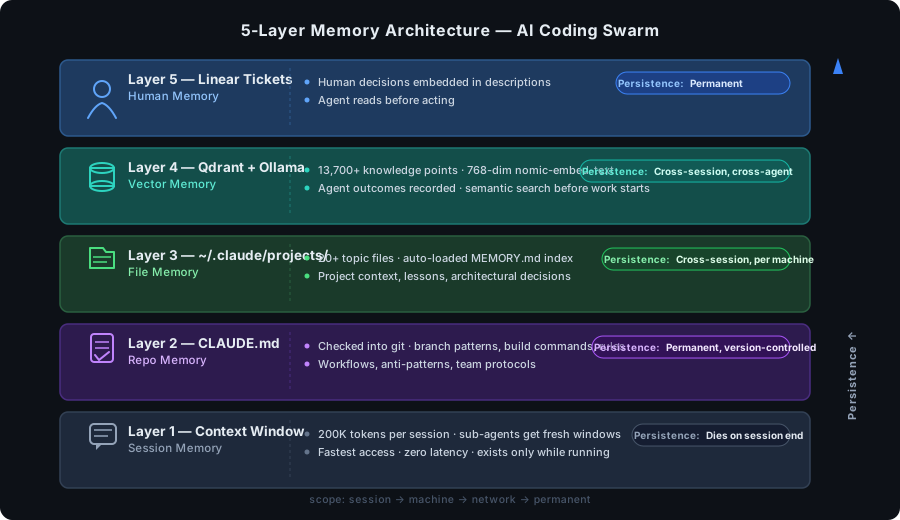
Layer 2: CLAUDE.md files. Checked into git at each repo root. Every agent session in a repo automatically loads these rules — branch patterns, build commands, quality standards, things the agent must never do. This is institutional knowledge encoded as configuration.
Layer 3: File memory. Claude Code's auto-memory system at ~/.claude/projects/. Over 20 topic files covering build pipelines, secret management, deployment procedures, lessons learned. Survives across sessions on the local machine.
Layer 4: Vector memory. Qdrant stores nearly 16,000 knowledge points and all agent outcomes. Before starting work, agents query for relevant prior learnings using semantic search. After completing work, they record what happened — success or failure, with context. This is how the swarm learns. A failed Gradle build gets recorded. The next agent searching "shindig android build" finds it and doesn't repeat the same mistake.
Layer 5: Linear tickets. The human-agent interface. I embed decisions directly in ticket descriptions and comments. Agents read both before acting. This is the only layer where I actively participate in the memory system.
The key insight: agents query Qdrant before starting work and record outcomes after finishing. A memory-agent container consolidates learnings every 6 hours. The swarm genuinely learns from its own history.
The Failures
This is the part that matters. Anyone can describe an architecture. The real story is in how it broke.
124 Pull Requests Overnight
I woke up to 124 open PRs on one repo. About 90 were duplicates — the same tickets processed over and over because the director never checked whether a PR already existed. It would scan Linear, find tickets in Agent Queue, spawn sessions, create PRs — but never move tickets out of Agent Queue. Next scan cycle: same ticket, new branch, new PR.
While I was closing duplicates, the hive director kept creating new ones. 7 more appeared during cleanup.
The fix: Dedup guard. Check for existing PRs before creating new ones. Move tickets to In Progress when work starts, In Review when the PR is created. Deterministic branch naming — no random suffixes.
The lesson: If your agent loop doesn't track what it already did, it will do everything twice.
Every Session Ran on Opus
I noticed rate limits being hit in hours instead of lasting all day. The director script never passed a --model flag. Claude Code defaults to Opus — the most expensive model. 747+ sessions ran on Opus before I caught it.
One missing CLI flag. Token consumption was 3-5x what it needed to be. A $15/day operation became $65/day.
The fix: Added --model sonnet as default. Model escalation: attempts 1-2 use Sonnet, attempt 3 auto-escalates to Opus. Immediate 3-5x cost reduction.
The lesson: Defaults matter enormously at scale. A single missing flag multiplied by 1,000 sessions turned a cost-effective operation into a budget-burner.
46 out of 46 Sessions Failed in One Cycle
The director launched 46 sessions. Every single one died within 1-20 seconds with "You've hit your limit." The director treated these as normal failures, incremented attempt counters, and after 3 "failures" permanently skipped each ticket.
By morning, 37 tickets were stuck in limbo and dozens were marked as "max attempts exceeded" — even though the failures had nothing to do with the tickets themselves.
The fix: Rate limit pattern matching. Auth failure detection. Fast-fail threshold — sessions dying in under 10 seconds don't count as real attempts. If >80% of a cycle's sessions fail fast, auto-pause the director and sleep until the rate limit resets.
The lesson: Your orchestrator must distinguish between "the task failed" and "the infrastructure failed." Burning ticket attempts on rate limits is like marking a restaurant order as "rejected by customer" because the kitchen caught fire.
The Agent That Sent Me on a Wild Goose Chase
A Haiku-model agent was assigned an Apple Sign-In bug. After a brief code scan, it confidently told me: "The Firebase Console needs com.firefly.shindig.dev added as an authorized domain."
I spent 20 minutes checking the Firebase Console. It was already correct. The .dev bundle ID doesn't even exist — the app uses com.firefly.shindig.ios.
The real problem was three code bugs the agent never found.
The fix: Verification protocol. Agents can't tell humans to change external config without file-and-line code evidence. Memory files take precedence — if memory says it's configured and working, the agent needs strong evidence before claiming otherwise. Config-level claims get escalated to Opus for verification.
The lesson: An agent that confidently sends you on a wild goose chase is worse than one that says "I don't know." Cheaper models need guardrails that prevent authoritative claims about systems they can't inspect.
OAuth in Containers: Three Login Attempts Destroyed
Claude Code authenticates via OAuth. Tokens expire and refresh automatically. I tried three approaches to get auth working in Podman containers:
- Run
claude logininside the container. Works until restart — credentials wiped. - Base64-encode credentials as an env var. The entrypoint script always decodes on startup, overwriting any token refresh.
- Copy host credentials at build time. Stale by the time the container runs.
The fix: Bind-mount the host credentials file directly into the container:
volumes:
  - ${HOME}/.claude/.credentials.json:/home/swarm/.claude/.credentials.json:rw
Login once on the host, container stays authenticated across restarts, rebuilds, and token rotations. Set the env var to empty string so the entrypoint skips injection.
The lesson: Live auth tokens must be shared, not copied. Any approach that snapshots a token creates a stale copy.
Five Zombie Detectors, All Broken
After the 124-PR incident, I discovered agent processes that finished work but never exited. They consumed memory and held file locks, preventing new sessions.
I had five separate zombie detection mechanisms. Not one caught the problem.
The bash script only checked for duplicates, not resource thresholds. The task-level checker only looked at output file freshness. The cleanup script explicitly skipped daemon processes. The ops runner only checked Qdrant task state. The container-based detector couldn't see outside its own namespace.
The fix: One detection mechanism that actually works end-to-end. Process-level zombie detection in the ops runner. Session timeout as a catch-all.
The lesson: Five bad detectors are not better than one good one. Each was built for a specific variant of the problem but had blind spots. The result was false confidence.
The Numbers
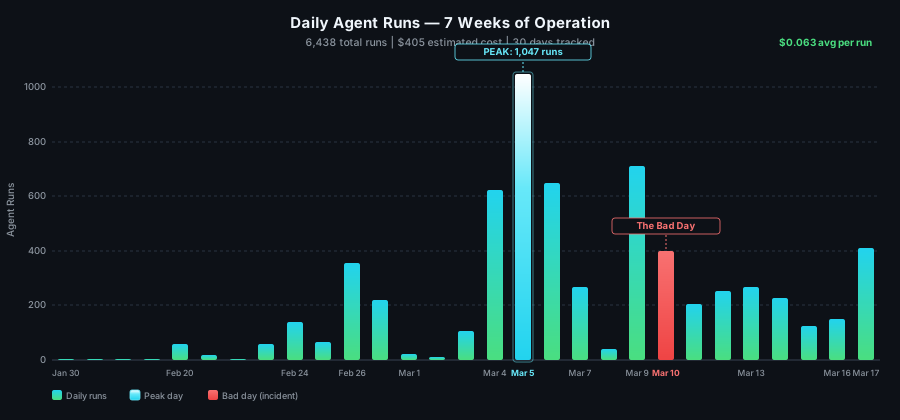
Over 7 weeks of operation:
| Metric | Value |
|---|---|
| Total agent runs | 6,500+ |
| Repos covered | 6 |
| Peak day (March 5) | 1,047 runs |
| Qdrant knowledge points | nearly 16,000 |
| Prometheus metrics | 43, exported every 5 minutes |
| Concurrent session capacity | 35 (15 dragon + 20 hive) |
The run counts are real — every Claude Code session triggers a lifecycle hook that logs the run to a daily JSON file. Those numbers come straight from the system.
The cost numbers I'm deliberately leaving out. The cost tracker I built was a placeholder designed for direct API usage — it assumes fixed token counts per model and multiplies by Anthropic's published per-token pricing. That gives you a number, but not a real one. A Sonnet session that refactors 40 files burns a lot more tokens than one that fixes a typo, and my tracker treated them identically.
I'm building the version that actually works — one that reads the local Claude Code session files where real token consumption is recorded. Those files exist on both machines. The data is there. I just haven't piped it into the dashboard yet.
What I can tell you is the operational picture: model routing matters. Starting every session on Sonnet and only escalating to Opus after two failures means the cheap model handles the majority of tickets. Sub-agents running on Haiku handle research, testing, and review at a fraction of the cost of having the main session do everything. The exact dollar amount is less interesting than the pattern — route to the cheapest model that can do the job, escalate only on failure.
All of this runs on Claude Code MAX, a flat-rate subscription. The rate limit resets at 4am Central. The director knows this and sleeps instead of churning.
What Would I Change About My AI Coding Swarm?
Start with dedup guards. The 124-PR incident and the 36-PR overnight should have been prevented by Day 1 architecture. Any autonomous loop needs to track its own history before it gets turned loose.
Log everything from the start. The event bus saved me multiple times during debugging. I wish I'd had it from Day 1 instead of adding it after the first disaster.
Test cleanup code like feature code. The broken worktree cleanup and the five zombie detectors both failed because cleanup code got less testing rigor than feature code. It needs more.
Auth health checks before session launch. The 75-second sessions and the 46-session cascade both came from auth failures that the director didn't detect. A single pre-flight auth check would have saved hours.
What's Next: From 35 Agents to an Extensible Swarm
35 concurrent sessions across two machines is where I am today. It's not where this is going.
The architecture was built to be extensible from the start — the director doesn't care what machine it runs on, only that it can reach Linear, GitHub, and a Qdrant instance. Adding a third machine means adding another director with its own pool of session slots. The Qdrant task queue already handles cross-machine dispatch. The memory layer is shared. A new node joins the swarm by pointing at the same vector database and ticket board.
The next step is making that real. Right now, spinning up a new director node requires manual configuration — env vars, repo paths, auth setup. I'm building a setup script that walks through first-run configuration and a repos.yaml config file that replaces the hardcoded repo mappings. Project management adapters so it works with Linear, GitHub Issues, or eventually Jira. The goal is: clone the repo, run setup.sh, point it at your ticket board and repos, and you have a director.
But the bigger idea is the hive mind.
Right now, each director operates independently. Dragon and Hive share a Qdrant instance for task dispatch and learnings, but they don't coordinate. If Dragon is rate-limited, Hive doesn't pick up the slack. If both directors claim the same ticket in the same scan cycle, the dedup guard catches it at PR creation time — which works, but it's reactive.
The next evolution is a coordination layer. A lightweight orchestrator that sits above the directors and manages the global pool: which tickets are claimed, which machines have capacity, where rate limits are hit, and how to redistribute work when a node goes down. Think of it as the difference between two independent teams that happen to check the same task board, versus a project manager who assigns work to teams based on who's available.
The memory architecture scales with this. Qdrant already supports multiple collections and namespaces. When a third machine joins, its agents query the same knowledge base. The learnings from Dragon's failed Gradle build are immediately available to a new node's agents. The swarm gets smarter as it gets bigger — every node contributes to the shared memory, and every node benefits from it.
There's also a problem nobody talks about: pipeline starvation. The swarm was idle last night — not because anything was broken, but because Agent Queue was empty for 5 of 6 repos. The director was healthy, auth was working, but there was nothing to do. Autonomous execution means nothing without autonomous work generation. That's the next frontier — a PM swarm that identifies technical debt, writes tickets, and feeds the coding swarm. Execution without intake is just an expensive idle loop.
I'm also closing the QA gap. Right now, agents write code and create PRs, but verification is still manual. Maestro flows for mobile, Playwright for web, triggered by the director after PR creation. The goal: ticket to verified PR with zero human intervention.
And the cost tracking needs to be real. The current tracker was a placeholder built for API billing — fixed token estimates multiplied by published pricing. I'm building the version that reads actual token consumption from Claude Code's local session files. The data is already there on both machines. It just needs to be piped into the dashboard so I can see what this actually costs at the per-session level.
I'm planning to open-source the director. The 2,400-line Node.js file is specific to my setup, but the pattern is general. The memory architecture is the piece I think has the most value for other teams — the 5-layer approach solves a real problem that every AI coding setup hits eventually. Agents forget. This system remembers. And when the extensibility layer is done, anyone with a spare machine and a Claude Code subscription can add a node to their swarm.
If you're building something similar — or thinking about it — I'd genuinely like to compare notes. This is new territory for everyone. The tooling is primitive, the failure modes are novel, and the patterns are still emerging. I'm figuring it out as I go, one 124-PR disaster at a time.
Book a conversation. No pitch, no pressure — just two people trying to figure out how to make AI agents stop creating duplicate pull requests.
Enjoyed this? Share it:
Get one CTO-level insight per week
No spam, no fluff. Just one actionable insight on architecture, leadership, or scaling — straight from the field.
Subscribe via email

Mathew Dostal
Fractional CTO & Principal Architect
Specializing in Edge AI/IoT, Agentic & Distributed Systems, and Mobile — across commerce, fintech, and tech. 37+ companies, hundreds of codebases, 10+ apps shipped, and code that's served millions of users. Led engineering teams at Frontiers Market, Firefly Events, and Fortune 500 companies including Hertz, Costco, and Wayfair.
Need strategic guidance on your architecture decisions?
I help companies make critical technology choices with confidence — from modernization roadmaps to scalability assessments and build-vs-buy analysis.
Relevant services: Fractional CTO • Technical Advisory
Discussion
Questions, corrections, or thoughts? Leave a comment below.
Keep Reading
Why You Probably Don't Need a Full-Time CTO
The work I do now as a fractional CTO isn't new. But it's different from consulting in ways that matter — and the companies who need it most aren't always the ones you'd expect. From enterprise architecture at Hertz to helping a small business in DFW take market share from competitors with a 40-year head start.

The Architecture Behind a 6,000% Throughput Improvement at Hertz
Rates changed 10,000 times per second — too fast to cache. But the tens of thousands of rules that determined which rate applied didn't. Pre-filtering those rules upfront turned hundreds of DB calls into one Redis fetch and one targeted lookup. That's the architecture behind a 6,000% improvement at Hertz.
Right-Sizing Your DevOps Stack
Most DevOps problems aren't about tools, they're about people. Stop over-engineering and start shipping with a right-sized stack. This CTO's guide offers practical advice on CI/CD, managed services, and automation that saves time instead of creating more work for your team.
The Week I Stopped Coding: Orchestrating an Army of AI Agents
I've stopped coding, but not building. Orchestrating an army of AI agents now, I see how it echoes enterprise digital transformation and signals a profound evolution for technical leadership.