Fractional CTO vs Full-Time CTO: Which Is Better For Your Growing Startup?
Share this blog:

Fractional CTO vs Full-Time CTO: Which Is Better For Your Growing Startup?
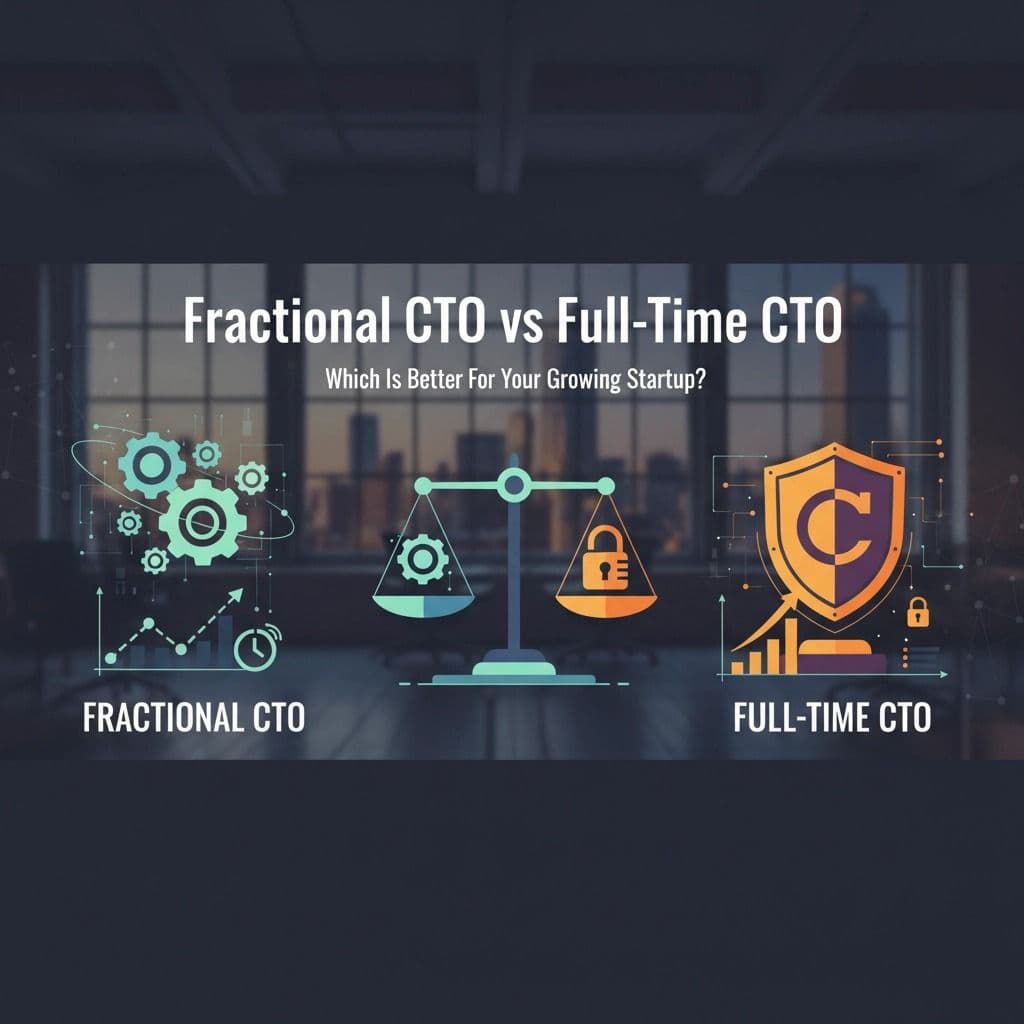
Choosing the right technical leadership for your startup isn’t just a hiring decision; it’s a strategic choice that profoundly impacts your burn rate, product development speed, and long-term scalability. The question isn’t whether you need technical expertise at the executive level (you absolutely do), but rather how much dedicated time and investment that expertise requires for your specific growth stage.
The landscape has shifted dramatically in recent years. Fractional CTOs have evolved from emergency consultants to strategic partners, while the Full-Time CTO role has become increasingly expensive and specialized. Understanding when each model serves your startup best can save you hundreds of thousands of dollars and months of development time.
The Real Cost of Technical Leadership
Let’s cut straight to the numbers that matter most to your cash flow. A Fractional CTO typically costs between $36,000 and $180,000 annually, depending on their hourly rate ($150-$300) and your engagement level (10-80 hours monthly).
A Full-Time CTO, however, commands a significantly higher investment. When you factor in all components, the annual cost can range from $200,000 to over $500,000. This includes:
- Base Salary: The primary component of their compensation.
- Equity Grants: Usually 1-5% for early-stage companies, representing long-term commitment.
- Benefits Package: Approximately $75,000 annually, covering health, dental, retirement, etc.
- Recruitment Time & Fees: 3-6 months of recruitment during which technical strategy stagnates, plus recruitment fees (15-20% of annual salary).
- Onboarding Costs: Time and resources spent integrating them into the company.
Beyond these direct expenditures, consider the Hidden Cost of a Bad Hire, which can exceed $500,000 in total losses, encompassing lost time, missed opportunities, and severe organizational disruption. This often overlooked expense can be devastating.
Fractional CTOs eliminate most of these risks. They start within 1-2 weeks, bring pre-vetted expertise, and require no benefits overhead. If the fit isn’t perfect, you adjust the engagement or part ways without severance complications.

What Fractional CTOs Bring to the Table
Fractional CTOs operate like seasoned specialists for your technical challenges. They’ve seen your problems before: across multiple industries, company stages, and technology stacks. This breadth of experience means they can diagnose issues quickly and apply proven solutions rather than experimenting with untested approaches.
Their superpower lies in strategic focus. Without the burden of daily management responsibilities, Fractional CTOs concentrate their limited hours on high-impact initiatives: architecture decisions, technology strategy, team scaling plans, and stakeholder alignment. They cut through organizational noise to address the technical decisions that move the needle.
The flexibility factor cannot be overstated. Need more strategic guidance during a funding round? Scale up their hours. Launching a new product line? Adjust their focus. Found a Full-Time CTO candidate? Transition smoothly without contractual complications.
However, Fractional CTOs have clear limitations. Their part-time availability means they can’t handle daily team management, urgent technical fires, or the cultural integration that shapes company DNA. They’re strategic advisors, not operational managers.
The Full-Time CTO Advantage
Full-Time CTOs offer something Fractional leaders cannot: complete dedication to your vision. They invest 100% of their professional energy into building your technical organization. This dedication allows them to develop deep institutional knowledge that becomes invaluable as complexity grows.
This profound cultural integration enables them to understand the subtle dynamics between departments, the unspoken technical debt that frustrates developers, and the long-term implications of architectural decisions. They build genuine relationships across the organization, becoming ambassadors for technical excellence.
Full-Time CTOs excel at managing larger technical teams (50+ people), navigating complex internal politics, and making the continuous stream of decisions that keep development moving forward. When technology represents your core competitive advantage, their undivided attention becomes essential for maintaining market leadership.
The investment is substantial, but it generates compounding returns through team development, architectural coherence, and strategic consistency that part-time leadership struggles to achieve.
Making Your Strategic Choice
This is where your startup's future technical trajectory takes shape. Your decision between a Fractional and Full-Time CTO hinges critically on your startup's current stage, capital efficiency, and strategic technical demands. To make the optimal choice, honestly assess your immediate needs and long-term vision.
Choose a Fractional CTO when:
- Your annual technology budget sits under $300,000, and capital efficiency is paramount. If you’re pre-Series A with limited runway, investing $200,000+ annually on executive salary rarely makes strategic sense.
- You are a pre-revenue company, in MVP development phase, or navigating a transition period where you need expertise without long-term commitment. Focus on building product and proving market fit with Fractional guidance.
- You have project-based technical needs like migrating to cloud infrastructure, implementing DevOps practices, or scaling development processes.
- Your technology strategy is still evolving, requiring the flexibility to adjust engagement levels and focus.
Choose a Full-Time CTO when:
- You’ve crossed into Series B or later funding rounds with established product-market fit.
- You are managing 50+ person technical teams, requiring dedicated leadership for complex coordination, team development, and cross-functional alignment. If you’ve achieved significant traction and raised substantial funding, your technical complexity likely demands Full-Time attention.
- Technology drives your core competitive advantage and demands undivided strategic attention. Companies with sophisticated technical architectures or technology-driven competitive advantages typically justify the investment.
- You operate in highly regulated industries requiring constant compliance oversight, or have complex technical architectures needing continuous, dedicated architectural decisions.

Remember that timing matters. The best Fractional CTOs get booked months in advance, while hiring exceptional Full-Time CTOs can take six months or longer. Plan your technical leadership transition well before you desperately need it.
The Hybrid Approach That Actually Works
Many successful startups don’t treat this as an either-or decision. They often begin with a Fractional CTO to establish technical direction, build initial team capabilities, and define strategic priorities. This foundational work creates clarity around what kind of Full-Time CTO they eventually need to hire.
The Fractional CTO can then help write job descriptions, interview candidates, and ensure a smooth transition when the time comes for Full-Time leadership. Some companies even retain Fractional CTOs after hiring Full-Time executives, leveraging their expertise for specialized projects or ongoing advisory roles.
This staged approach maximizes capital efficiency while building toward the dedicated leadership that scaling companies eventually require.
The startup landscape rewards strategic thinking about resource allocation. Choosing the right technical leadership model at the right time can accelerate your growth trajectory while preserving the capital needed to scale effectively. Make this decision based on your specific circumstances, not industry trends or investor pressure.
Your technical leadership choice shapes everything from development velocity to team culture. Now, with a clear understanding of each model's strengths and limitations, critically assess your startup's stage, budget, and strategic needs. Choose the model that aligns with your current reality while positioning you for the growth you’re building toward. Make your decision with clarity, knowing it will be a cornerstone of your startup's success.

Explore More
Need CTO-level leadership for your team?
Whether you're scaling engineering, navigating a transition, or need strategic technical direction, I provide executive leadership without the full-time commitment.
Relevant services: Fractional CTO • Strategic Sprint
Stay Updated
Get notified about new articles on engineering leadership, Edge AI, and fintech.
Or subscribe via email
Discussion
Questions, corrections, or thoughts? Leave a comment below.
Related Posts
What Does a CTO Actually Do?
Hint: it's not picking databases. The CTO role is about translating between two worlds that don't speak the same language, protecting the people who do the work, and making decisions that neither side can make alone. Here's what it actually looks like from the inside.
How to Hire Engineers
After hiring across 7+ companies and dozens of roles, here's what actually works for finding and keeping great engineers—without breaking the bank.
Startup Culture & The Human Element
Great startup culture isn't ping pong tables and free lunch. It's hiring hungry people, giving them ownership, and not burning them out.